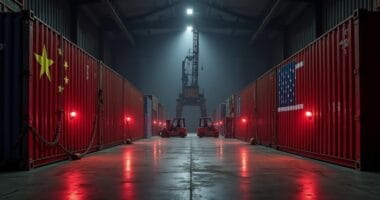

Costco’s bulk-buying strategy isn’t just surviving tariffs—it’s thriving. Their massive purchasing power and lean operations actually create a protective shield against trade pressures. With $2.8 billion in annual membership fees and under 4,000 product lines, they can pivot quickly when tariffs hit. Their stripped-down business model, combined with loyal members and efficient supply chains, turns market chaos into opportunity. There’s more to this retail giant’s resilience than meets the eye.
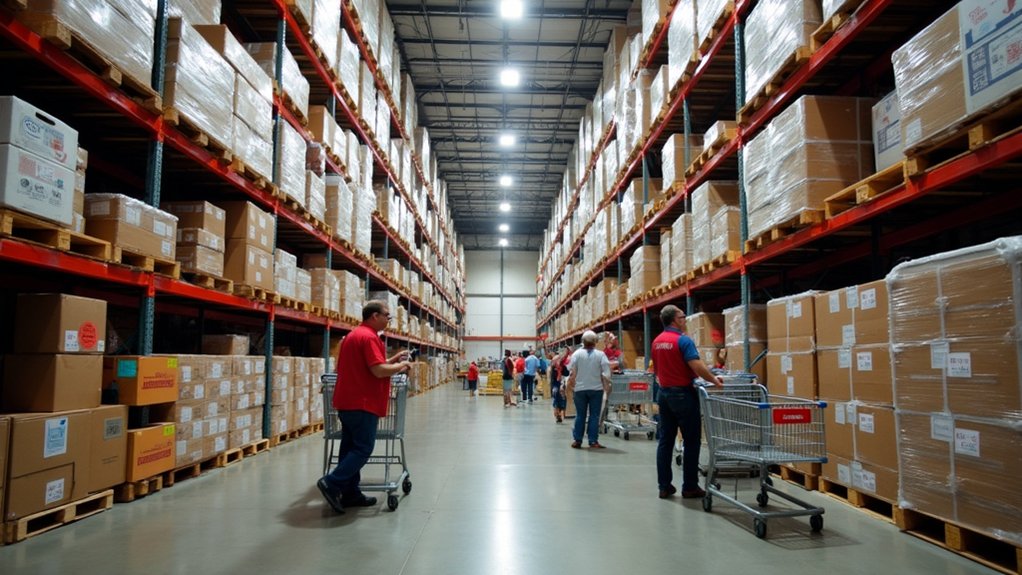
While other retailers scramble to compete in an increasingly cutthroat market, Costco’s bulk-buying empire continues to thrive through a deceptively simple formula. Buy big, sell cheap, and make customers feel like they’ve joined an exclusive club. Pretty basic stuff, really. But it works like magic.
In a world of retail chaos, Costco’s winning recipe is brilliantly basic: massive volume, thin margins, and members-only exclusivity.
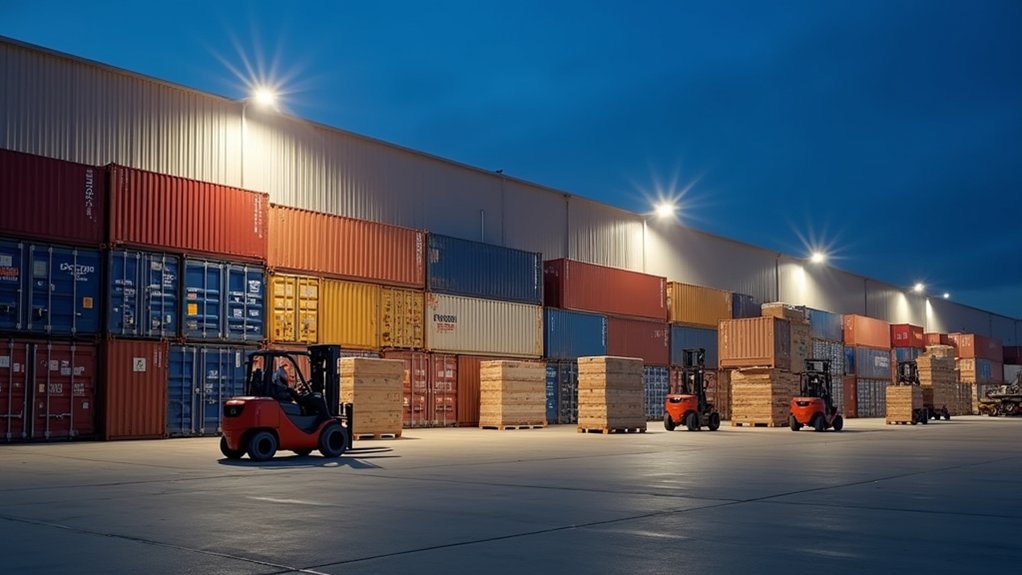
The secret sauce? It’s all about those massive orders. Costco flexes its buying muscle by snatching up products in monster quantities, scoring sweet deals that make regular retail buyers weep. Then they pass those savings along to members, marking up prices just enough to keep the lights on. Who needs fancy displays when you’ve got forklifts and concrete floors? Their streamlined supply chain ensures products move efficiently from suppliers to warehouses. Their focus on market liquidity helps maintain stable pricing even during economic fluctuations.
Their membership model is pure genius. Those annual fees aren’t just pocket change – they’re the backbone of Costco’s profitability. Members fork over their dues and then shop like they mean it, determined to squeeze every penny of value from their investment. Their $2.8 billion in fees annually proves just how successful this strategy is. And with renewal rates that would make most subscription services jealous, Costco’s got a steady stream of cash flowing in.
But here’s where it gets interesting: tariffs. Those pesky trade taxes that keep CEOs up at night. You’d think they’d be Costco’s kryptonite, right? Maybe not. Their limited selection of products (seriously, under 4,000 items) actually gives them room to maneuver.
When tariffs hit, they can pivot faster than a shopping cart with that one weird wheel.
Their supplier relationships are rock solid too. When you’re buying entire shipping containers of stuff, manufacturers tend to listen when you call. Need a better price to offset tariffs? Let’s talk. Want to explore alternative sourcing? They’re all ears.
And with operational efficiencies that would make an efficiency expert blush – think rapid inventory turnover and bare-bones overhead – Costco’s got plenty of cushion to absorb some hits.
The bottom line? Costco’s bulk-buying model isn’t just surviving in the age of tariffs – it’s practically tariff-proof. Those massive purchases, loyal members, and stripped-down operations aren’t just competitive advantages. They’re a shield against market chaos.