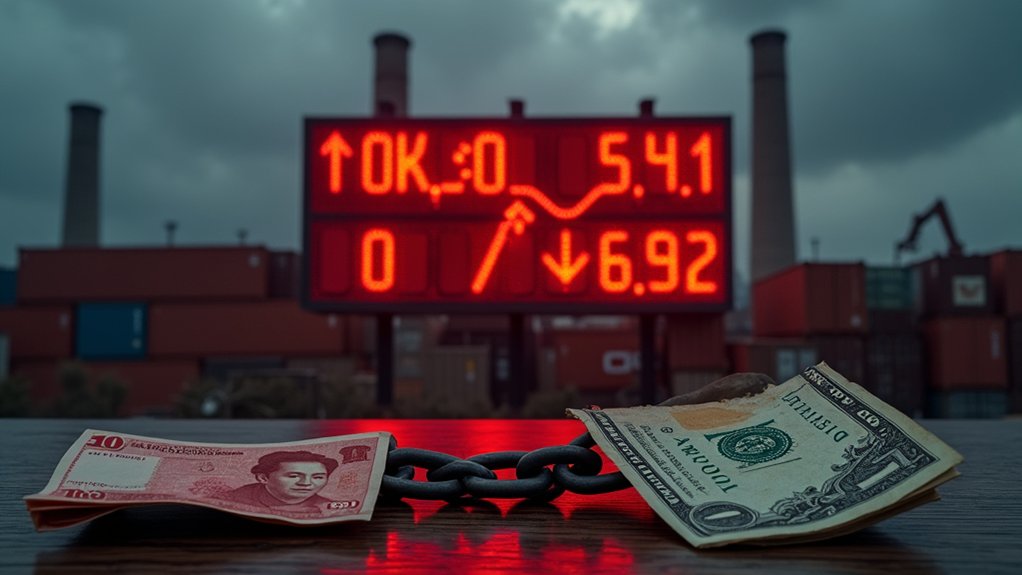

Trump’s latest bombshell – a 10% tariff on almost everything America imports – is set to hit in April 2025. The sweeping policy, targeting major trade deficit countries like China, exempts smartphones and laptops but still threatens to shake up global markets. Economists warn of potential deflation and supply chain chaos, while U.S. manufacturers split on benefits. Markets are jittery, and with 90 deals planned in 90 days, this economic reset could get messy.

In a seismic shift for global trade, former President Donald Trump has released a sweeping 10% tariff on nearly all U.S. imports, sending shockwaves through the world economy. The ambitious plan, set to take effect April 5, 2025, promises to shake up decades of established trade practices. And boy, does it pack a punch.
The policy, implemented under the International Emergency Economic Powers Act, takes special aim at countries with the largest U.S. trade deficits. Remarkably absent from the tariff hit list? Smartphones and laptops. Because apparently, even economic nationalism has its limits when it comes to Americans’ precious electronics.
China stands squarely in the crosshairs of this economic offensive. Trump’s strategy aims to disrupt Beijing’s export-driven model and force a reshoring of U.S. manufacturing. The Administration’s ambitious goal to secure 90 deals in 90 days underscores the aggressive pace of this trade overhaul. It’s a bold move that could either reshape global trade or spectacularly backfire.
Trump’s tariff gambit targets China’s economic core, betting big on disrupting Beijing’s exports while aiming to revitalize American manufacturing.
The International Monetary Fund isn’t exactly throwing confetti over the announcement. Their projections suggest the U.S. economy could take a bigger hit than either Europe or China. Global growth forecasts are already being slashed, and markets are bracing for turbulence. Economists warn this could trigger a deflationary spiral as consumers delay purchases and businesses cut production.
American industries are understandably nervous. While some manufacturing sectors might get a boost, others face the very real prospect of retaliatory tariffs from trading partners. Supply chains built over decades could unravel in months. The loss of manufacturing jobs, totaling approximately 5 million since 1997, has already devastated many American communities.
And despite the electronics exemptions, U.S. consumers should prepare for their wallets to take a hit.
The policy’s duration remains conveniently vague, with Trump declaring the tariffs will stay until he determines the trade deficit threat is resolved. Translation: it’s complicated. The Project 2025 agenda frames this as America’s grand economic reset, but the reality might prove messier than advertised.
For now, the world watches and waits. Markets are jittery, allies are concerned, and economists are reaching for their antacids. Whether this tariff blitz delivers the promised American industrial renaissance or triggers a global economic crisis remains to be seen.