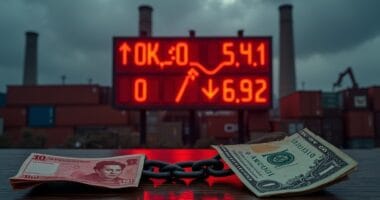

China isn’t taking U.S. tariffs lying down. Their nine-agency task force launched an aggressive counteroffensive against crushing American duties that reached 145%. Beijing weaponized rare earth minerals and slapped 125% retaliatory tariffs on U.S. goods like soybeans and cars. The financial cage match disrupted supply chains and rattled markets worldwide. Both sides claim they can weather the economic tsunami, but the true cost of this high-stakes battle is still unfolding.
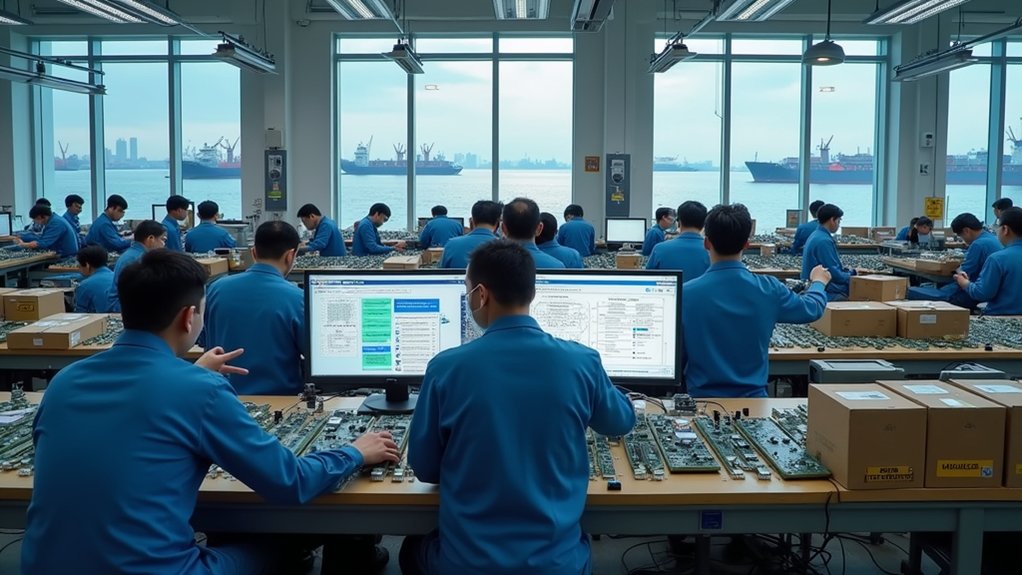
Trade tensions exploded as the U.S. and China locked horns in an unprecedented tariff battle, with duties skyrocketing to a staggering 145% on Chinese goods by 2025.
China didn’t take this lying down. They hit back with 125% tariffs of their own, turning global trade into something resembling a financial cage match.
The U.S. came out swinging, slapping tariffs on everything from satellites to medical devices.
China’s response? A methodical targeting of American pressure points – soybeans, pork, and cars got whacked with 25% duties. Talk about knowing where it hurts.
The impact rippled through both economies like a financial tsunami, leaving disrupted supply chains and inflated prices in its wake. The conflict began when Trump announced a 20% to 50% tariff on solar panels and washing machines.
Beijing wasn’t content with just playing the tariff game. They assembled a task force of nine government agencies – because apparently, revenge is best served by committee.
China escalated beyond tariffs, forming a nine-agency task force to orchestrate their economic counterattack against U.S. trade measures.
Their masterstroke? Weaponizing rare earth minerals. These obscure elements, essential for electronics and defense equipment, suddenly became China’s trump card in the economic warfare.
The U.S. justified its aggressive moves under Section 301, citing China’s alleged intellectual property theft.
Sure, American officials admitted there’d be some “short-term pain,” but they insisted it was worth it for the long game.
Meanwhile, China was busy warning other countries not to cozy up to U.S. trade deals. Real diplomatic stuff.
The fallout hit hard across multiple sectors. Tech companies scrambled as semiconductor supplies got squeezed.
American farmers watched their soybean exports wither.
Even the mighty automotive and aerospace industries took heavy hits.
Consumer electronics? Don’t even ask about those prices.
By April 2025, Chinese retaliatory measures had expanded to cover all US imports with an 84 percent tariff.